NEW MEETING of the Erasmus+ Project VOCATIONAL TRAINING FOR INCLUSION

On October 25, the Erasmus+ project partnership La FP por la inclusión (Vocational Training for Inclusion), co-funded by the European Union, held a new meeting in which partners presented their different ideas on how to structure the project’s first deliverable, the Methodological Guide, as well as different ideas for organizing the second deliverable, the resources for technicians and healthcare associations. In addition, a dialogue was initiated on how to structure outcome 5, the virtual course for training students on work placements.

In this way, the project involves various stakeholders: social and health organizations, vocational training students and technicians, and health personnel from rare disease associations.

In upcoming meetings, the partnership, made up of Fundación Isabel Gemio , Federación ASEM, the Cyprus Alliance of Rare Disorders, Rare Diseases Croatia, Universidade de Évora, and Fundación Escuela de Oficios , will continue working on the development of the intellectual outputs.

NEW MEETING of Erasmus+ VOCATIONAL EDUCATION TRAINING FOR INCLUSION PROJECT

On 19 September, the partnership of the Erasmus+ project Vocational Education Training for Inclusion, co-funded by the European Union, held a new meeting.

During the meeting, the partners worked on developing the Methodological Guide for adapting social and healthcare organisations to host vocational training students. They also discussed the monitoring of resources for training technicians and healthcare professionals from rare disease associations as work placement tutors.

The project thus involves various stakeholders: social and healthcare organisations, vocational training students, technicians and healthcare professionals from rare disease associations.


Kick-of meeting of the Erasmus+ VET for inclusion: Inclusion of rare diseases in vocational educational and of VET students in working with people with rare diseases

On Monday 14th July, the kick-off meeting of Erasmus+ VET for Inclusion was held with the following objectives:

  • Promote changes in the structure, working methods, training of technicians and daily practices to encourage RD associations to offer greater direct services to their users, enhancing digitalization, green practices, inclusion and the full development of their users.
  • Enhance the work experience and practical knowledge of students from the medical and social families of vocational training so that they are able to care for people with RD and access this labour market.
  • Promote real changes in VET centres to turn them into real agents for inclusion, both through the work of their trainees and by encouraging students with disabilities to access adapted internships, and by promoting green and digital internships in their centres.
  • Implement a system of internships in collaboration with VET schools to offer their users adapted services implemented by technicians with specific expertise, involving VET and RD schools across Europe.

Coordinated by the Isabel Gemio Foundation and co-funded by the European Union, this new initiative is a partnership with the Federación Española de Enfermedades Neuromusculares (Spain), Fundación Escuela de los Oficios (Spain), Universidade de Évora (Portugal), Cyprus Alliance For Rare Diseases (Cyprus) and Rare Diseases Croatia (Croatia) as partners.

This partnership will focus its efforts to work together on the development of the following outputs that make up the project:

  • METHODOLOGICAL GUIDE FOR THE ADAPTATION OF SOCIAL AND HEALTH ENTITIES TO HOST INTERNSHIPS FOR VOCATIONAL TRAINING STUDENTS.
  • RESOURCES FOR THE TRAINING OF TECHNICIANS AND HEALTH PROFESSIONALS FROM RARE DISEASE ASSOCIATIONS AS INTERNSHIP TUTORS.
  • VIRTUAL TRAINING COURSE FOR TRAINEES.
  • GUIDE FOR THE CREATION OF INCLUSIVE INTERNSHIPS IN VOCATIONAL TRAINING.
  • RARE DISEASES TECHNICIAN CARD.
  • NETWORK OF RARE DISEASES ASSOCIATIONS AND VOCATIONAL TRAINING CENTRES.
  • VET FOR INCLUSION WEB PLATFORM.

Fundación Isabel Gemio asiste a la Jornada “Por un enfoque integral en enfermedades raras: Desafíos y oportunidades” organizada por el CSIC en una nueva iniciativa en el el marco de su programa de Itinerario Cicerón

El Consejo Superior de Investigaciones Científicas (CSIC) ha celebrado la jornada “Por un enfoque integral en enfermedades raras: desafíos y oportunidades”, una nueva iniciativa en el marco de su Programa de Itinerarios CICERON. Con esta propuesta, el CSIC pretende acercar la ciencia desarrollada en sus laboratorios a gestores políticos, empresas, periodistas y otros agentes sociales, con el objetivo de reforzar el papel de la ciencia y la innovación en la resolución de desafíos alineados con el objetivo europeo de Autonomía Estratégica, centrado en cuatro pilares clave: salud, digitalización, alimentación y energía.

La jornada se estructuró en dos partes. La primera tuvo lugar en el Instituto de Investigaciones Biomédicas Sols-Morreale (IIBM), donde los asistentes visitaron diversos servicios científico-técnicos como RMN Biomédica Sebastián Cerdán, Genómica, Histología, Microscopía y Evaluación Neurofuncional No Invasiva. La jornada inició con la bienvenida ofrecida por Ana Castro, vicepresidenta de Innovación y Transferencia del CSIC, y Pilar López Larrubia, directora del IIBM. Castro destacó el objetivo de los Itinerarios Cicerón: promover un espacio de diálogo y colaboración, propicio para generar ideas conjuntas frente a retos sociales.

En este recorrido, los investigadores mostraron su labor diaria y los avances alcanzados en cada una de estas áreas.

La segunda parte se desarrolló en el Espacio Converge-CSIC, con una sesión científica dedicada a la proyección de vídeos y la exposición de distintas líneas de investigación impulsadas por la Red de Enfermedades Raras del CSIC (RER-CSIC). Se presentaron las siguientes investigaciones:

  1. Luisa Botella, investigadora del Centro de Investigaciones Biológicas Margarita Salas(CIB-CSIC, Madrid): Investigación personalizada junto con médicos y pacientes, en enfermedades raras vasculares
  2. Lluís Montoliu, investigador del Centro Nacional de Biotecnología (CNB- CSIC, Madrid): Modelos animales para entender mejor las enfermedades raras y poder aprender a curarlas.
  3. Belén Pérez, investigadora del Centro de Biología Molecular Severo Ochoa (CBM, CSIC-UAM, Madrid): Investigación para transformar la vida de quienes viven con enfermedades metabólicas hereditarias.
  4. Pascual Sanz, investigador del Instituto de Biomedicina de Valencia (IBV-CSIC, Valencia): Conocer mejor la enfermedad de Lafora, una forma ultrarara de epilepsia mioclonica progresiva.
  5. María Ángeles Balboa, investigadora del Instituto de Biomedicina y Genética Molecular de Valladolid (IBGM, CSIC-UVa, Valladolid): Descifrando el código oculto de los lípidos en enfermedades raras autoinflamatorias.
  6. Ricardo Escalante Instituto de Investigaciones Biomédicas Sols-Morreale (IIBM, CSIC-UAM, Madrid): Cuando la autofagia falla: mecanismos y modelos celulares en enfermedades raras.

La jornada culminó con un coloquio moderado por la Dra. Pilar López-Larrubia, directora del IIBM, donde se compartieron las principales conclusiones del encuentro. Entre ellas, se destacó la importancia de adoptar un enfoque integral en las enfermedades raras, adaptando las estructuras a las capacidades, y considerando aspectos clave como el diagnóstico, las terapias, el papel de la sociedad, la calidad de vida y la transferencia del conocimiento científico a la realidad material.

Asimismo, se subrayó la necesidad urgente de trasladar las terapias a las personas que las necesitan, evitando que la investigación se quede únicamente en la fase básica. También se puso el foco en los retos asociados al alto coste de acceso a los tratamientos, pese a la existencia de numerosos ensayos clínicos. Por último, se abordó la relevancia de concienciar a las compañías farmacéuticas y el impacto positivo que pueden tener las nuevas tecnologías y la inteligencia artificial en el diagnóstico precoz de las enfermedades raras.

Web del IIBM

Web de la RER-CSIC
We start the pilot testing of Erasmus+ Educational Aid Kits in the Field of Rare Diseases with Vocational Education Training teachers from Colegio Internacional GNicoli

Fundación Isabel Gemio, the coordinating entity for the project co-financed by the European Union, met on Wednesday 11th June at Colegio Internacional GNicoli in Madrid to carry out the first pilot tests.

During the tests, teachers from the Middle Degree of Nursing Auxiliary Care, Middle Degree of Guidance Technician in the Natural Environment and Leisure and Higher Degree of Teaching and Socio-sports Animation participated.

We would like to thank Colegio Internacional GNicoli for giving their space and time to carry out the tests and all the teachers for their participation and dedication.

We’re still working!

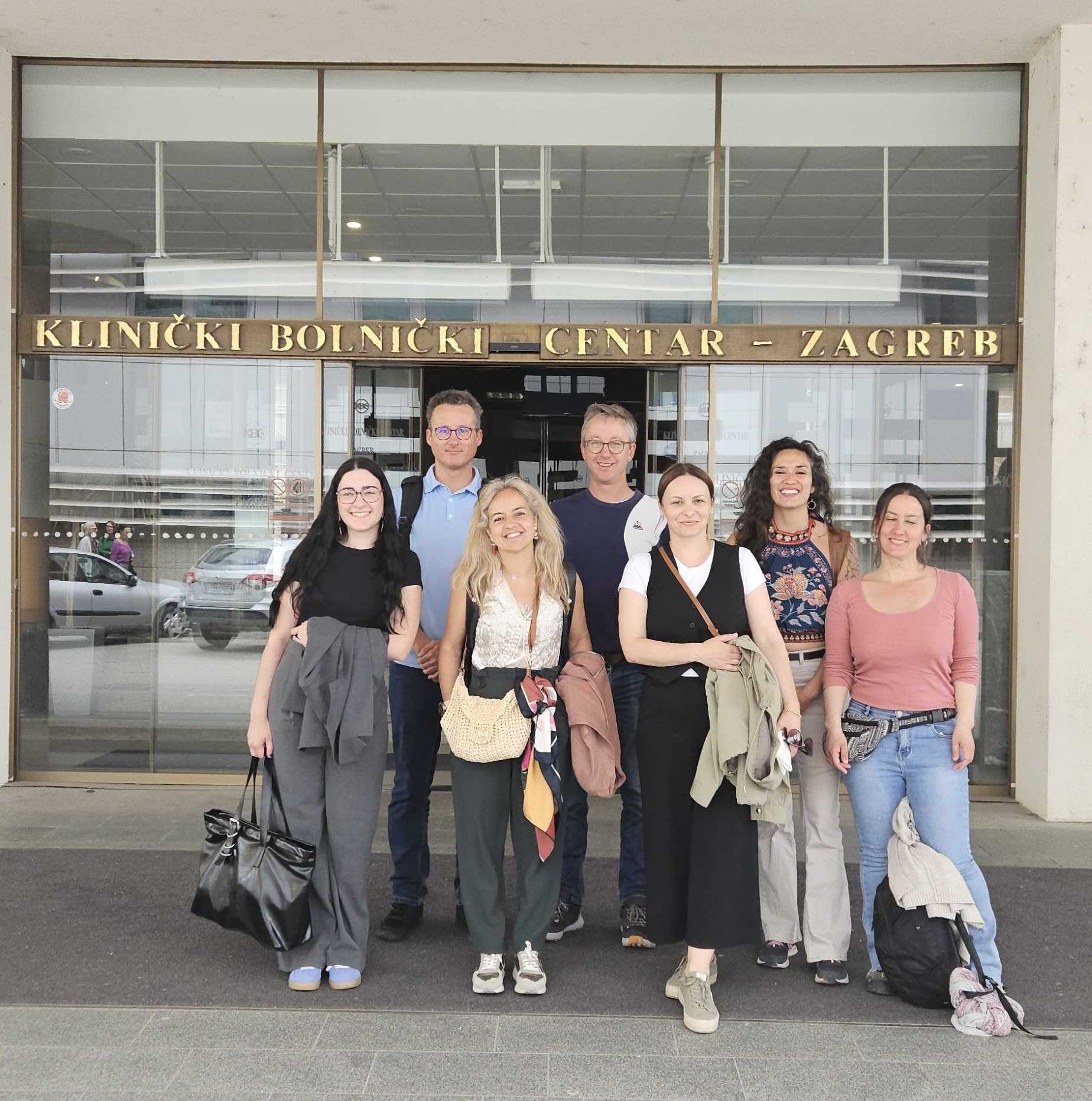
Zagreb Hosts the Third and Final Transnational Meeting of the Erasmus+ EDUCATIONAL KITS IN THE FIELD OF RARE DISEASES

On May 26th, 2025, the Erasmus+ EDUCATIONAL KITS IN THE FIELD OF RARE DISEASES consortium, co-funded by the European Union, held another transnational meeting in Zagreb, Croatia, to review and revise the project’s progress.

During the meeting, the final draft of the methodological guide, which will be available in several languages, and educational kits aimed at achieving the successful inclusion of students affected by rare diseases in Vocational Training (VET) were analyzed. Work was also done on the virtual course for training VET teachers on the use of resources and methodology, which will be available on the project website.

Similarly, during the meeting, the partners continued to discuss the next steps to finalize the main project results and activities. After the working meeting, the project partner was fortunate enough to visit some of the facilities at the Zagreb University Hospital, led by Dr. Ivo Barić professor of pediatrics, subspecialist in medical genetics and head of the Division for Metabolic Diseases at the Hospital.

Fundación Isabel Gemio would like to thank all the project partners for their efforts and impeccable work, and Rare Diseases Croatia as the meeting host.

Let’s keep working!

New online meeting of the ERASMUS+ EDUCATIONAL AID KITS IN THE FIELD OF RARE DISEASES

On 14th March 2025, the partnership of the Erasmus+ project EDUCATIONAL KITS IN THE FIELD OF RARE DISEASES, co-funded by the European Union, held a new online meeting to analyse and monitor the development of the results.

During the meeting, work continued on the progress of the intellectual outputs of the project, such as the methodological guide which will be translated into several languages and the educational kits which, in addition to being available in English and Spanish, will have a wide range of open educational resources aimed at the successful inclusion of students affected by rare diseases in Vocational Education and Training (VET).

In this way, the project involves different professionals from health, education, social services and sport whose training is essential to develop specific skills to adequately respond to the needs of people affected by rare diseases. The project will also rely on a network of Rare Disease experts to provide advice and guidance.

Rare diseases represent a series of obstacles that have a profound impact on the lives of those affected, including delays in diagnosis, which, on average, can last up to five years. Moreover, its chronic and progressive nature has a negative impact on the mobility, autonomy and emotional and economic stability of patients and their families.

During the meeting, the partners continued to prepare the dissemination activities of the project. In addition, the partnership started to prepare the agenda of the third and last transnational face-to-face meeting of the project that will take place in Zagreb (Croatia) on Monday 26 May 2025.

Barcelona hosts the second transnational meeting of ERASMUS+ EDUCATIONAL KITS IN THE FIELD OF RARE DISEASES

On 24 January 2025, the partnership of the Erasmus+ project EDUCATIONAL KITS IN THE FIELD OF RARE DISEASES, cofunded by the European Union, held a new transnational meeting in Barcelona to examine and review the development of the work.

During the meeting, the first draft of the methodological guide that will be available in several languages and the educational kits aimed at achieving a correct inclusion of students affected by rare diseases in Vocational Education and Training (VET) were analyzed.

In addition, at the meeting the partners continued to discuss the next steps to further develop the project’s results and activities.

After the working meeting, the partners had the opportunity to visit some of the magnificent facilities of the Hospital San Joan de Déu with Dr. Josep Serrat, Director of Planning and Management Support.

This was followed by a visit to the Casa de Sofia, led by its founder Dr. Jordi Cruz, the first care centre for children with complex or advanced chronic illnesses in Spain, whose main objective is to avoid hospital admission when it is not strictly necessary, delaying possible long-term hospitalisation as much as possible. La Casa de Sofia also takes in patients after hospital admission, by means of planning that avoids new situations of risk of admission; as well as offering constant accompaniment and therapeutic respite in situations of family overload.

From Fundación Isabel Gemio we would like to thank all the partners and the Pérez-Llorca Law Firm for hosting us and Federación Española de Enfemedades Neuromusculares ASEM as the host of the meeting.

Let’s keep working!